How to File a Homeowners Insurance Claim: Phone vs. Online vs. App
Should you file your claim by phone, online, or app? Here's what each method means for your claim.
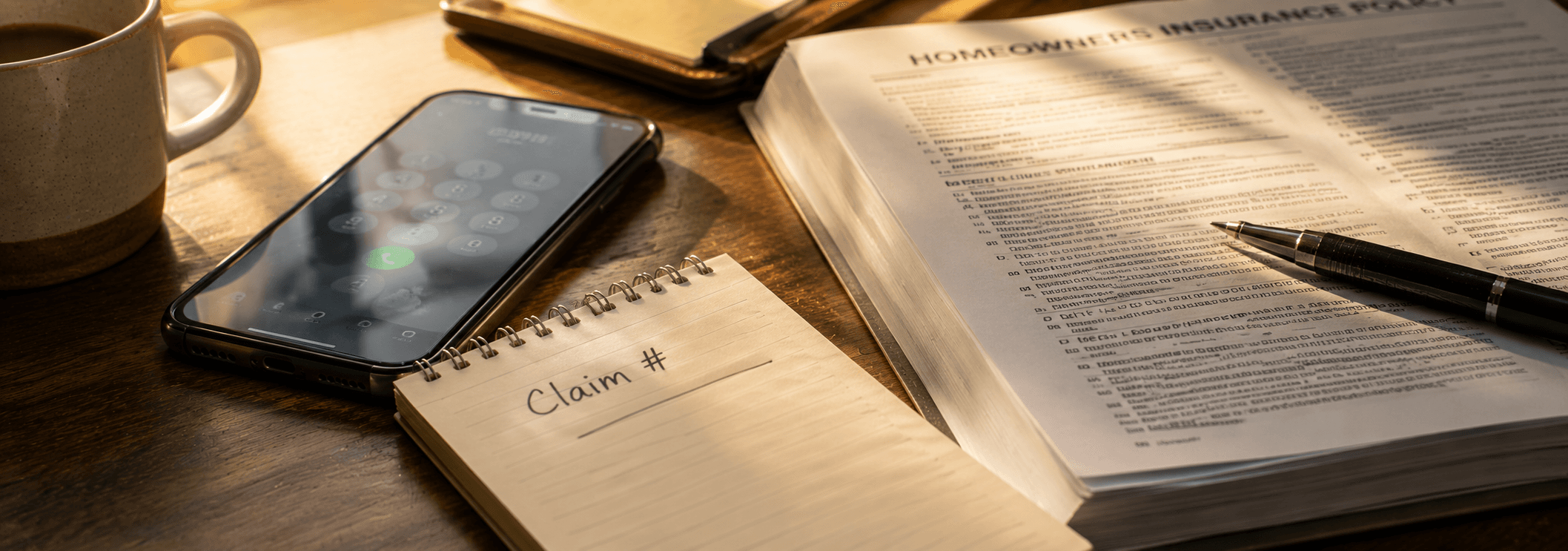
How to File a Homeowners Insurance Claim: Phone vs. Online vs. App
Most major insurers now let you file a claim three ways: by phone, through a web portal, or via a mobile app. The method you choose isn't just a matter of convenience — it affects what gets recorded, how quickly things move, and how much control you have over how your loss is initially described.
For a significant loss, that distinction matters more than most homeowners realize.
Why Does the Filing Method Affect What Gets Recorded?
Every method creates a different type of record. A phone call produces notes in the claims representative's system — accurate if the rep is attentive, incomplete if they're not. An online portal submission produces a timestamped document of exactly what you entered, in your own words, at the time you submitted. A mobile app submission produces similar documentation, often with photos embedded directly.
For a complex or high-value claim, the initial description of cause and date that goes into the file matters. The more control you have over that description — and the more of a contemporaneous record you have of what you submitted — the better your position if the initial characterization becomes a dispute point later.
When Should You File by Phone?
Calling your insurer's claims line is the most common method and, for any significant loss, the best starting point.
What happens: You speak directly with a claims representative who opens the claim, assigns a claim number, and records your description of the loss in their system.
Why phone works for major losses:
You can ask questions in real time — and the questions you ask on the first call matter considerably. What's my ALE limit? Are emergency mitigation expenses reimbursable, and what's the submission process? When can I expect an adjuster to be assigned? A phone call is the only method where you get answers to those questions before hanging up.
You can also flag urgency. If your home is uninhabitable, if there's active water intrusion requiring immediate professional response, or if you need emergency guidance, a live representative can escalate appropriately.
What to watch for:
The description you give on this call is on record in their system. Be factual and specific about the cause — "a pipe burst behind the bathroom wall" not "water damage" — and accurate about when you first discovered the damage. Don't speculate, don't minimize, and don't exaggerate.
Always ask for a claim number before hanging up. Then follow the call with a brief email to the claims line or your agent summarizing what was discussed. You now have a written record of the call's content, not just your own notes.
Best for: Any significant loss, uninhabitable home, complex damage, or when you have questions that need real-time answers.
When Does an Online Portal Make Sense?
Most insurers have a claims portal where you submit a first notice of loss, upload documentation, and track claim status.
What it does differently: The portal creates an immediate, timestamped record of exactly what you submitted — in your own words, at the time you submitted it. For a phone call, you're relying on the representative's notes accurately capturing your description. For a portal submission, you have your own copy.
You can also attach photos and documentation at the time of filing, which can accelerate the process — the adjuster sees your documentation before rather than after the inspection.
What to watch for:
Accuracy matters more than completeness here. Don't fill optional fields with guesses or estimates. If you're unsure of the exact cause, describe what you know accurately rather than approximating something that might not be correct. Save or screenshot your submission confirmation — that confirmation number and timestamp is your documentation that the claim was filed.
Best for: Minor to moderate losses with a clear, unambiguous cause and scope. Also effective for after-hours reporting when you want to get the claim started before the next business day.
When Does a Mobile App Work Best?
Many insurers now offer apps that let you file a claim on-site, upload photos directly from your camera roll, and track progress in one place.
The real advantage: Filing while you're standing in the damaged space, with photos taken in the moment, creates the most contemporaneous record possible. The photos are timestamped and GPS-tagged. The description is written while the scene is in front of you.
What to watch for:
App capabilities vary significantly by insurer. Some apps fully open a claim and assign a claim number immediately; others queue the submission for a representative to process, which means the clock doesn't officially start until they do. Confirm what your insurer's app actually does before assuming the claim is filed.
For complex or large losses, most insurers still recommend following up an app submission with a phone call to confirm the claim is open and an adjuster is assigned.
Best for: Simple losses with clear, documented cause. On-site filing immediately after discovering damage. Supplementing a phone filing with photo uploads.
What Applies Regardless of Method?
Get a claim number. Don't consider the initial report complete until you have a claim number — by phone, email confirmation, or app notification. This is your reference for every conversation that follows.
Document your filing. Portal confirmation, app submission screenshot, or follow-up email after a phone call. You need a record that the claim was filed, when, and with what description.
The initial report is not the full claim. Filing opens the process. Scope, inventory, and dollar amounts are all established later — you have significant opportunity to provide additional documentation after filing.
Be consistent. If you file by app and follow up by phone, your description of the cause and date should be identical in both. Inconsistencies in the initial record create friction when the adjuster reviews the file.
Frequently Asked Questions
Does it matter how quickly I file after the loss? Yes — significantly. Most policies require prompt notice, and some specify exact timeframes of 30-60 days. Waiting more than 48-72 hours to report a significant loss creates risk even for clearly covered damage. File as soon as it's safe to do so.
What if I file online and then want to follow up by phone? That's the recommended approach for significant losses — file online to establish the timestamped record, then call to ask questions and confirm the claim is open. Reference your portal confirmation number on the call.
Can I change my claim description after filing? You can provide additional information and clarification, but changing a key detail — like the date or stated cause of loss — after the fact can create complications. Describe what you know accurately at filing rather than providing information you might need to correct later.
What is the first thing the insurance company does after I file a claim? They open a file in their claims system, assign a claim number, and typically assign an adjuster within 1-5 business days depending on claim volume, complexity, and insurer. In high-demand periods after major weather events, adjuster assignment can take longer. Ask on your first call when you can expect the adjuster to be assigned.
The method matters less than the discipline: get a claim number, document what you submitted, and follow every phone call with a written summary. Homeowners who treat the initial filing as the first entry in a documented record — not just a phone call they made — consistently have better evidence when disputes arise.
ClaimEase provides general guidance. Coverage determinations are made by your insurer. Consult a licensed public adjuster or attorney for specific advice about your claim.