Why Filing Your Insurance Claim Too Quickly Can Hurt You
Why rushing to file too soon can weaken your claim.
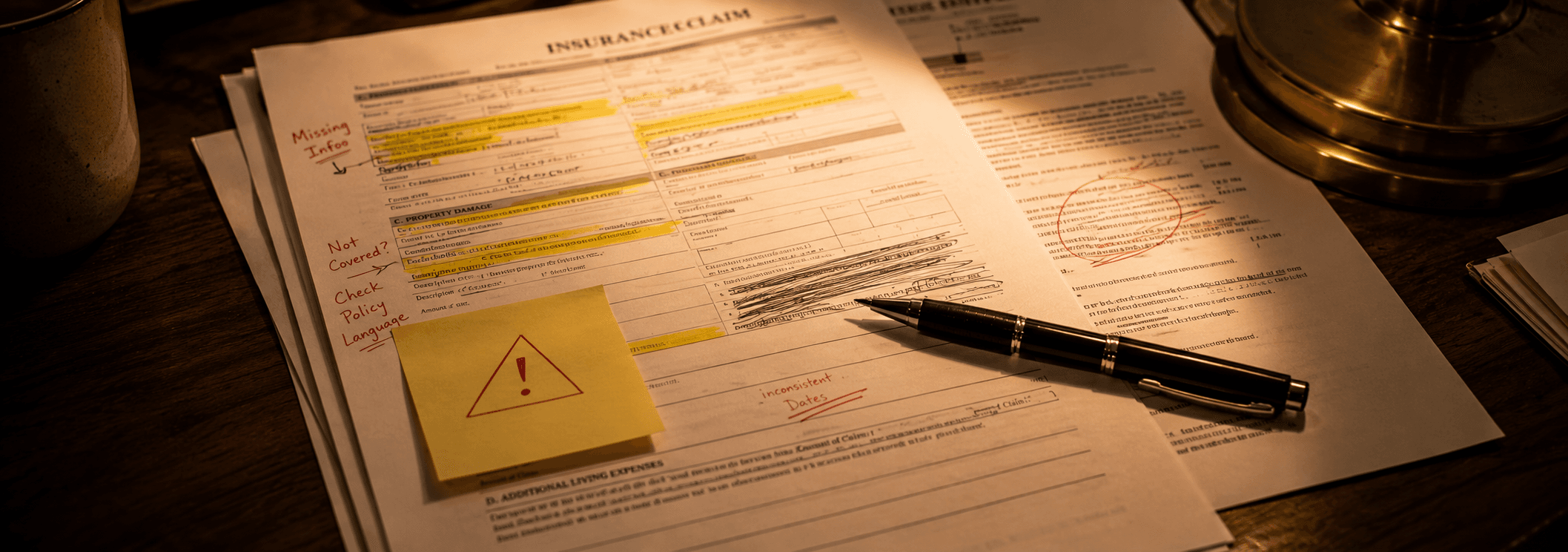
Why Filing Your Insurance Claim Too Quickly Can Hurt You
After a loss, the instinct to do something is strong. Filing the claim feels like the most concrete first step — and in one sense it is. But there's an important distinction between reporting the loss promptly, which you absolutely should do, and submitting an incomplete or premature formal claim, which can create problems you'll spend weeks untangling.
What Is the Difference Between Reporting and Filing?
Reporting is notifying your insurer that a loss occurred — giving them your name, policy number, date of the event, and a general description of the damage. This starts the clock on adjuster assignment, gets you a claim number, and satisfies the prompt notice requirement in your policy. Do this within 24-48 hours.
Filing — in the sense of committing to a formal scope of loss — is a different action. It involves describing the damage specifically enough that the adjuster develops an estimate and issues payment based on your representations. Rushing this part before you understand the full scope can lock you into an incomplete picture.
Think of it this way: report the event immediately, but take the time to understand what you've actually lost before formalizing your claimed scope.
What Are the Risks of Premature Filing?
Understating the scope. If you commit to a damage description before a contractor has walked through — before hidden damage behind walls has been discovered, before secondary damage from water migration has been identified — the formal scope reflects only what was visible in the first hours. Supplemental claims for damage discovered later receive more scrutiny than the original submission.
Triggering deadlines before you're ready. Formally opening the claim starts the Proof of Loss clock in many policies — often a 60-day deadline. An adjuster inspection may be scheduled before you've organized your documentation. Some insurers issue initial payment offers faster than homeowners expect, creating pressure to accept before you've evaluated it.
Inadequate contents inventory. A contents claim rushed through in the first 48 hours, before you've done the digital records research, will systematically understate your personal property losses. Missing items from the initial inventory are harder to add later.
What Does "Ready" Actually Mean?
You don't need weeks of preparation to file. Readiness for a formal claim submission typically requires:
Documentation complete for visible damage. Every affected room photographed, damaged items recorded, serial numbers captured for electronics and appliances.
At least one independent contractor estimate in hand or scheduled. A professional has assessed what the repairs actually require. Even a verbal walkthrough with a licensed contractor, with a written estimate to follow, gives you a basis for understanding the scope.
Basic policy review done. You know your deductible, whether you have RCV or ACV coverage, and what your ALE limit is.
Emergency mitigation documented. Any mitigation costs are receipted and logged.
For most claims, this level of readiness takes 2-4 days — not weeks. You're not materially delaying your claim. You're ensuring the claim you file reflects the actual loss.
What About Catastrophic Events?
After a major regional disaster — hurricane, widespread tornado, large hailstorm — filing your initial report early secures your place in the queue for adjuster assignment, which may have weeks of backlog. In this context, reporting early and thoroughly is especially important.
But even here: report immediately to open the claim, and take the time you need to document properly before the adjuster visit. The adjuster's inspection happening 4-6 weeks after a regional disaster gives you time — use it to get contractor estimates and organize your documentation.
Frequently Asked Questions
What if I report too late because I was waiting to document everything? Report immediately — documentation can follow. Your initial report establishes the loss date and satisfies the prompt notice requirement. You're not submitting a final claims package on that call — you're opening the claim.
Can the insurer use my early statements about damage against me? They can reference your initial description if there are later inconsistencies — particularly if you described damage more narrowly and later claim additional damage. This is why being accurate but not overly specific in the initial report is better than committing to a detailed scope before you know it fully.
What if the adjuster wants to schedule the inspection before I have contractor estimates? Schedule the inspection, but have your documented photos and damage list ready. Get contractor estimates scheduled immediately — even if the estimate itself arrives after the adjuster's inspection, having it in progress is better than not having started.
How long can I take between reporting and submitting a complete inventory? Most policies give you 60 days to submit a Proof of Loss — your formal documented claim. That window is for completeness, not a license to delay. The faster your complete submission arrives, the faster payment follows.
Is there any benefit to filing really quickly beyond getting in the queue? Opening the claim early secures your place in adjuster scheduling — particularly valuable after regional events. Beyond that, earlier is better only if your documentation is ready. A complete submission one week after the loss produces better outcomes than an incomplete submission the day after.
The most productive path is immediate reporting followed by deliberate documentation — not rushed documentation to match rapid filing. Report the event, secure the claim number, satisfy the notice requirement. Then take the days you need to understand the full scope before your formal submission represents what you're claiming. That sequence produces better-documented, better-supported claims than the alternative.
ClaimEase provides general guidance. Coverage determinations are made by your insurer. Consult a licensed public adjuster or attorney for specific advice about your claim.